Personal Loan vs. Credit Card: Where $10,000 Costs Less
Same $10,000, two ways to carry it. The difference isn't only the rate. It's that one of them ends.
Editorial note: Our content is independently written. We may earn a commission from partner links. Learn more.
Key takeaways
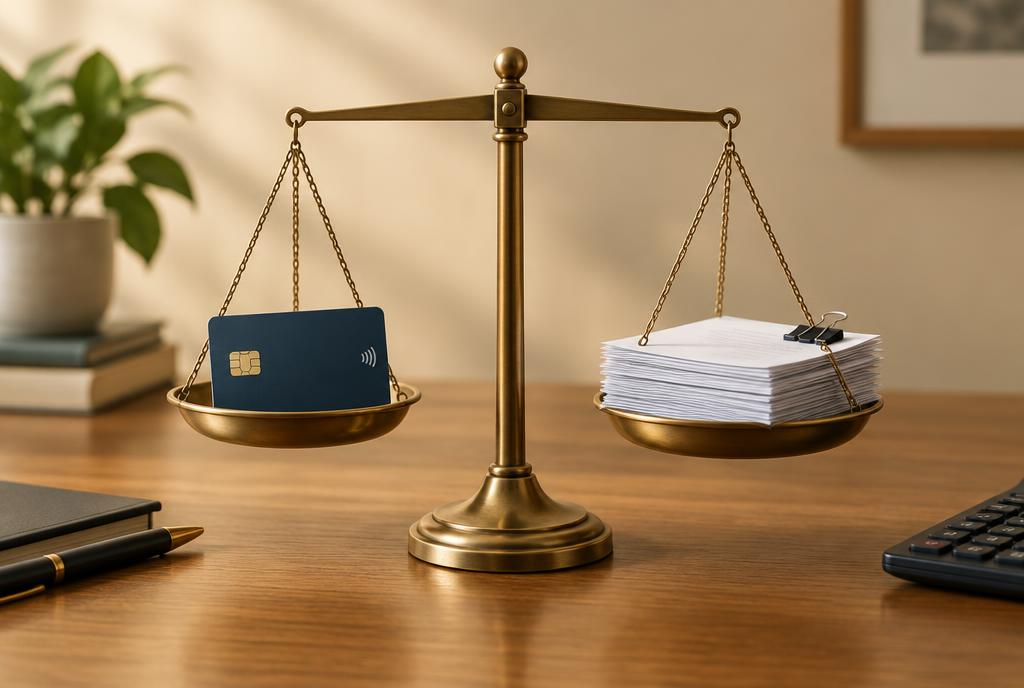
- $10,000 at 24% APR on minimums costs about $18,887 in interest over 25 years; a 36-month loan at 12.5% costs about $2,043.
- Even a disciplined fixed card payment at 24% costs thousands more than the same payment on a loan.
- Cards win for short carries under six months; loans win for anything longer.
Put $10,000 on a credit card at 24% APR and pay the minimum, and the card does what cards are built to do: it keeps you paying. Put the same $10,000 on a 36-month personal loan at 12.5% and the debt has an expiration date.
$18,887 vs. $2,043
Total interest: $10,000 at 24% APR paying the card minimum (1% + interest, 303 months) vs. a 36-month loan at 12.5% ($334.54/mo)
Even a disciplined cardholder paying a fixed $333 a month at 24% pays about $5,434 in interest over 47 months. The loan payment is nearly identical, finishes a year sooner, and costs $3,400 less. The structure is doing as much work as the rate.
When the card still wins
- You can pay the balance off in under six months. Loan origination fees and the hassle aren't worth it for a short carry.
- You qualify for a 0% intro APR and will clear the balance before it ends.
- You need flexibility more than a fixed schedule, and you trust yourself with it.
When the loan wins
Any time the carry is longer than a year, the rate gap is more than a few points, or you've already proven to yourself that "I'll pay it down next month" hasn't happened. A fixed payment and a fixed end date are the features. Everything else is a footnote.
Run your own numbers
Use our Debt Cost Calculator to compare your actual balance and APR against a sample loan payment.